A robot learns from examples, control rules, or both. Those inputs shape how it moves, what it notices, and how it reacts when a task changes. Good training can cut setup work, but bad training can send the same mistake through every run.
- Training data can include camera images, joint angles, force readings, and operator actions.
- Simulation lowers some testing risks, but it cannot copy every floor, object, or person.
- A safe rollout needs clear stop rules, human checks, and logs from each test.
What robot training changes
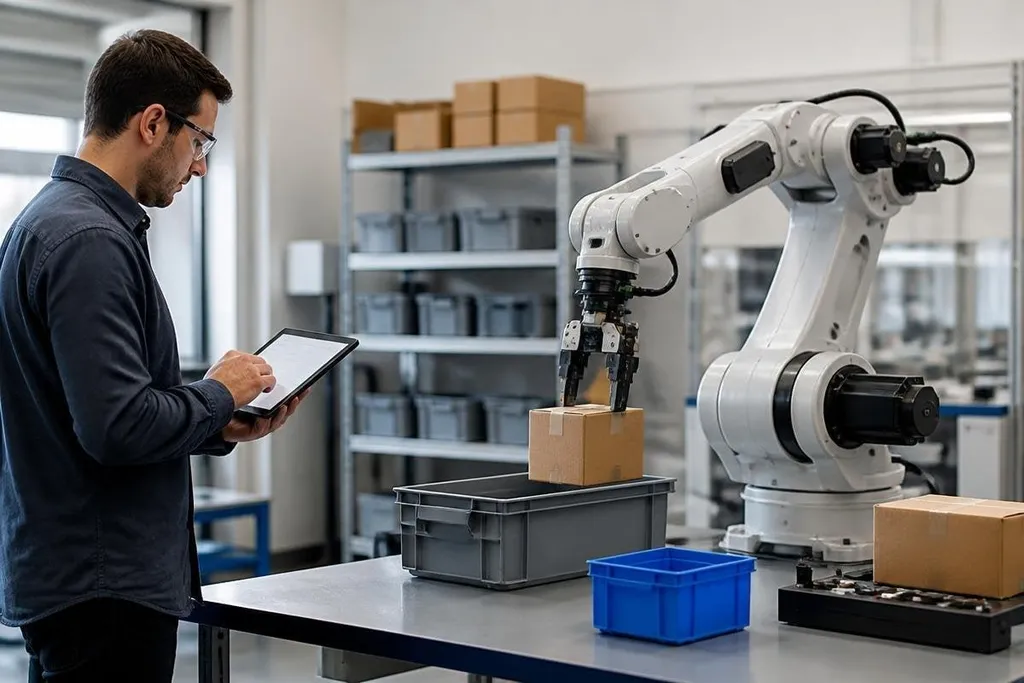
Training links a sensor reading to an action. A camera may show a box near a shelf, while joint sensors report the arm’s position. Based on those inputs, the control system selects a movement from examples or rules supplied during training.
This helps with tasks that resist a line-by-line script. Picking an object from a mixed bin is one case. Instead of one fixed path, the robot can learn from many object shapes and grip positions.
The gain depends on the data.
If the examples show clear objects under steady lighting, the robot may perform well in that setting. A darker bin, a damaged label, or a different object can expose a gap in what it learned.
Where the benefits appear
Training can reduce the time needed to set up a repeated task. An engineer can collect operator actions, label images, or adjust a motion model, then test the result across more cases than a single hand-built path would cover.
Simulation adds another place to test. A virtual robot can repeat a motion, change object positions, and log failed attempts without risking a real arm or product. The result still needs a check on physical hardware because contact, cable drag, surface grip, and sensor noise may differ.
This matters to a factory team that must keep production moving. A model that handles small changes in object position can reduce manual resets, but the team needs records that show where it succeeds and where it stops.
A training result needs the robot, test setup, and date beside it before anyone trusts the score. A dated report from Robot24.com can place those facts beside the factory task, leading into the risks that follow the data.
The risks that follow the data
The system can repeat a bad lesson with great consistency. If training images leave out dark objects, it may miss them.
Operator demonstrations can also include unsafe arm paths. The robot may copy those paths unless its limits block them.
Data can also carry hidden bias. A gripper trained on rigid boxes may struggle with bags, soft packages, or parts covered in dust. The failure may look random until the team checks which objects appeared in the training set.
A second risk comes from changes around the robot. New lighting, a moved shelf, a worn tool, or a different floor surface can change sensor readings. A model that passed in one work cell may need fresh tests after the cell changes.
Safety needs its own layer. Speed limits, force limits, collision checks, physical guards, and emergency stops should not depend on a learned model making the right choice every time. Training can guide a robot, but fixed safety controls still need to block dangerous motion.
A practical test plan
Before a trained robot touches production work, check the parts that can hide a failure:
- Review the data: list the objects, lighting, surfaces, and positions included in training.
- Test outside the examples: use new objects and locations that the model did not see during setup.
- Set hard limits: cap speed, force, reach, and operating area in the robot controller.
- Keep a human stop: place the emergency stop where the operator can reach it from the normal work position.
- Log each failure: record the sensor view, robot action, stop reason, and physical result.
- Repeat after changes: retest after a tool, shelf, camera, floor, or software update changes.
This plan separates task performance from safety. A robot may fail to pick an item, which costs time. It must also stop before a failed pick becomes a collision or an injury.
What to ask before rollout
Ask what the robot has seen, what it has never seen, and what happens when the input falls outside that set. The team should also name the person who can pause the system, inspect a failure, and approve a return to work.
I'd approve a trained robot for a narrow task only after it passes tests on new cases and keeps its safety limits outside the learning system. The next useful measure is the failure log from the first live work cell.